
NHFPI study finds lack of child care leads to significant financial losses for families, businesses and local governments
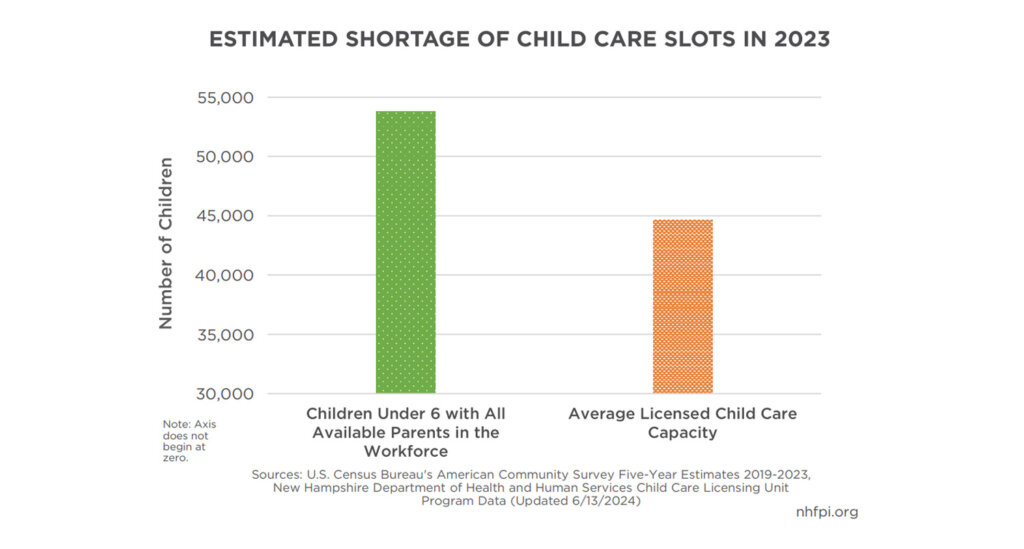
A new study from the New Hampshire Fiscal Policy Institute found that in 2023, New Hampshire businesses were losing an estimated $36 to $56 million annually due to the lack of available licensed child care slots. Meanwhile, New Hampshire families lost an estimated $114 to $178 million in earnings. Additionally, state and local tax revenues may have been reduced by $9 to $14 million due to inadequate child care availability. These tax losses equate to nearly $1,300 to $2,000 per unavailable child care slot in 2023.
“The economic cost of inaction is clear,” says Nicole Heller, NHFPI Senior Policy Analyst. “Investing in early care and education infrastructure is one of the most effective ways to support working families, strengthen businesses, and drive long-term economic growth.”
Although potential need dropped by 1.6 percent over the period of July 2017 through October 2024, available child care slots dropped by nearly 13 percent. Compounding the already difficult situation is the shortage of child care professionals across the State of New Hampshire. The turnover rate for early educators, according to New Hampshire Employment Security, was projected to be 17 percent between 2023 to 2025 compared to 11 percent projected for all occupations