
Investing in Child Care Is Investing in New Hampshire’s Future
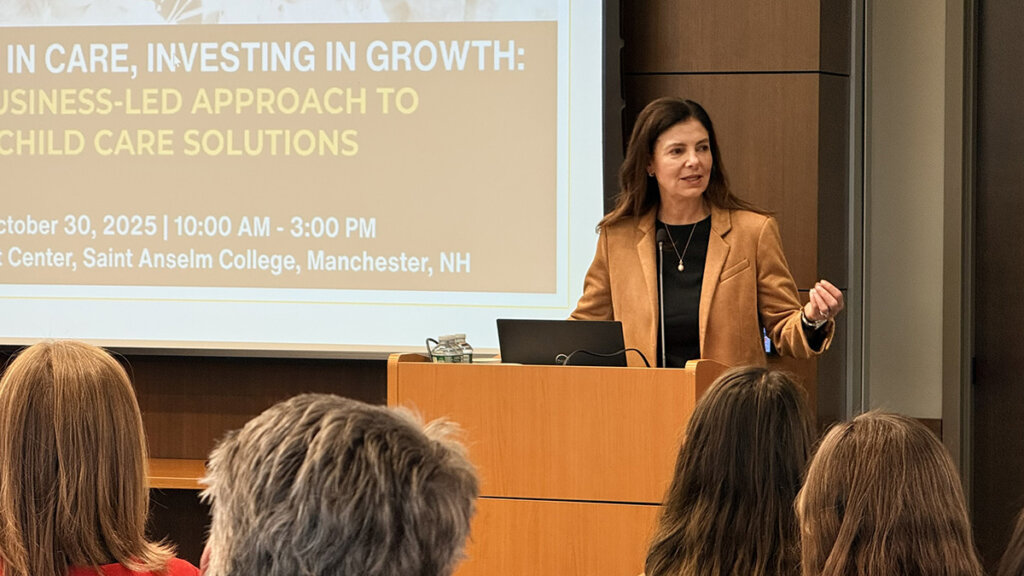
On October 30, leaders from across New Hampshire gathered for Investing in Care, Investing in Growth: A Business-Led Approach to Child Care Solutions. The forum brought together policymakers, business leaders, and early care and education (ECE) advocates to focus on strengthening New Hampshire’s child care systems — one of the most pressing economic issues facing families and employers. The Couch Family Foundation is grateful to the Business Industry & Association (BIA), Department of Business of Economic Affairs, Community Development & Financing Authority, and New Futures for organizing such a meaningful and important discussion.
It was an energizing morning. The conversations were candid, the ideas ambitious, and the shared commitment in the room was unmistakable. Business leaders, researchers, and public officials spoke with clarity that underscored a central point: New Hampshire’s child care challenges are straining families and restricting our economic prosperity.
Michael Skelton, President and CEO of BIA, highlighted child care availability and affordability as essential infrastructure for Granite State families and the economy in his remarks.
Governor Kelly Ayotte further brought the event into focus by underscoring that access to child care is as essential to a family’s quality of life as housing. She emphasized affordability for families and the importance of early educator preparation and highlighted the role employers can play in supporting working families.
We are grateful to Governor Ayotte for her keynote remarks. Her collaborative approach brought renewed attention to child care issues. She has consistently acknowledged that New Hampshire faces significant child care challenges, and her willingness to recognize these challenges and work toward solutions is greatly appreciated. We are also grateful to Mike Skelton and the BIA for recognizing that access to quality child care is economic development. These commitments will help build momentum for the continued progress New Hampshire urgently needs.
Dr. Jess Carson of the Carsey School of Public Policy, Nicole Heller, formerly of the New Hampshire Fiscal Policy Institute, Corinne Benfield from Stay Work Play, Elissa Margolin from St. Anslem, and Alex Lundry from Redbud Consulting, through Centerline Liberties, provided data and pollingdemonstrating that New Hampshire’s access to child care is impacting our economy. Families are taking notice and are willing to act. Some of the data that they shared:
- In New Hampshire, an estimated 55,000 children under age 13 are eligible to participate in the child care scholarship program, but less than 5,000 are currently enrolled.
- In 2024, child care was the 2nd highest cost for basic living expenses in NH, with a cost of $29,082 for the care of two children under five, compared to the highest cost of $47,249 for a mortgage payment for a median-priced home.
- The NH economy loses between $158.5M to $247.5M annually in loss of family income and state and local tax revenue due to lack of access to child care.
- In 2024, nearly 17,300 individuals were kept out of NH’s labor force each month because they were caring for children.
- 78% of NH voters (N=400) support additional federal investment in early childhood education, and 80% support state-level investment. 60% of voters say investing in early childhood education is a crucial government priority that will result in better outcomes and long-term economic benefits.
Together, these presentations offered a clear message: ECE is a bipartisan issue and that the current system is not meeting the needs of children, families,and employers.
Governor Ayotte referenced the state’s child care scholarship program as a valuable tool for families to access quality child care, enabling them to enter and remain in the workforce. We agree. With nearly 55,000 NH children eligible for this child care scholarship but only 5,000 enrolled, this gap shows that we can do more as a state to ensure working families are supported by helping to reduce their child care costs.
It is clear that New Hampshire policymakers, families, and employers are ready for meaningful action to increase access to affordable, quality ECE. A stronger, more resilient child care system is within reach, but achieving it will require participation from the public and private sectors. We believe there needs to be increased state and federal investment, with support and collaboration from the business community, philanthropy, and families. Guided by our mission, we know New Hampshire can create conditions for children and families to learn, thrive, and lead healthy, fulfilling lives while strengthening the Granite State’s economy. Investing in child care is investing in New Hampshire’s future.